We work on more than 300 projects every year.
From renovation to broader transitions: lessons from three years of LIFE BE FREE
How can we speed up the rate of renovation in Belgium? And what can we learn from other European countries? For three years, LIFE BE FREE sought answers by bringing together public authorities, funders, researchers and renovation professionals. During the closing event, we looked back at the results and looked ahead to what still needs to be done to get Belgian buildings ready for 2050.
The conclusion of three years of Life BE FREE
On Thursday 17 September, the Life BE FREE project concluded with a final national roundtable and closing event. For three years, IDEA worked alongside six partners in a unique Belgian setting: stakeholders from different regions, policy levels and sectors engaged in dialogue to develop funding and policy solutions that can accelerate renovation and the energy transition in buildings.
We looked back on what had been achieved over the past three years of Life BE FREE and looked ahead to the challenges that still lie ahead. Two questions were central to this: how can we further accelerate the rate of renovation in Belgium? How do we get everyone on board? And what lessons from other European countries can help in this regard?
Why is this relevant? Energy renovation touches upon federal, regional and local competences simultaneously. Financiers and renovation professionals must navigate this complex Belgian context. Owners and tenants have conflicting interests. Life BE FREE demonstrates how to overcome fragmentation – by bringing people together around the table and tackling precisely these questions collaboratively.
For IDEA Consult, this was a project we managed from start to finish: from the initial project idea and European application through to implementation and monitoring over a three-year period. Specifically, we provided support in the following areas:
· Project development and drafting: bringing ideas together into a coherent project in language that resonates across Europe.
· Project management: coordinating partners and work packages, and monitoring deliverables, planning, and technical and financial reporting.
· Insights drawn from our experience with European projects and policy advice: how to structure collaboration, genuinely bring stakeholders to the table, and co-create solutions together.
From this process, we have drawn a number of lessons that are also useful for anyone working on complex, sector-specific or cross-level issues – within the fields of renovation and energy, but equally beyond them.
Lessons from the project
How to make progress on complex, cross-level and cross-sector issues: three lessons we have learnt from Life BE FREE.
The Belgian context is complex, but that is precisely where the opportunities lie
The challenges of renovation and energy touch upon federal, regional and local competences. This institutional complexity is often perceived as fragmentation, but LIFE BE FREE demonstrated that it also offers opportunities to collaborate more effectively and learn from one another.
When local authorities, counties, regions and federal actors sit down together, it becomes clear that the same bottlenecks recur in Flanders, Wallonia and Brussels. At the same time, policies, instruments and solutions vary greatly depending on the context. This is precisely where the added value of knowledge exchange lies.
The same challenges can therefore lead to different solutions. Knowledge from different contexts and sectors can be scaled up to other situations, provided you consciously seek out those differences and learn from them. The trick is not to start by focusing on what is different and why a solution might not work in your own context, but to ask why it does work elsewhere and which elements are transferable.
Scaling up does not mean copying the same solution everywhere, but recognising successful principles, understanding the conditions under which they work, and then translating that into a different context.
Scaling up requires a combination of practice, research and policy
Sustainable scaling up only becomes possible when practice, research and policy do not operate in isolation, but work together as genuine partners.
Each domain contributes something different to this process. The practical sector knows the challenges faced by people, organisations and projects on the ground, and which solutions actually work. Research helps to move beyond individual experiences, recognise patterns and substantiate effects. Policy determines the framework within which innovation can flourish, but can also create barriers that hinder upscaling.
Today, there is already a great deal of knowledge in each of these domains, but when considered in isolation, they also come up against their own limitations. Pilot projects struggle to scale up when regulations do not adapt accordingly. Practical experience does not always reach policymakers. Research can yield valuable insights that do not sufficiently translate into concrete policy choices or implementation.
By deliberately bringing practitioners, researchers and policymakers together, a different kind of process can emerge: not just exchanging knowledge, but jointly defining problems, developing solutions, testing them and, where necessary, adapting the policy framework.
This not only makes policy better informed, but also creates better conditions for actually applying innovative solutions on a larger scale.
Dare to take the next step with pioneers
Broad engagement remains essential. By bringing together different sectors, policy levels and perspectives — including vulnerable and less visible stakeholders — a more complete picture of the problem and of possible solutions emerges.
However, broad engagement does not mean that everyone must take the same step at every stage. New or more progressive ideas rarely receive widespread support straight away. When consensus becomes a prerequisite for moving forward, there is a risk that innovative ideas will be discarded too soon.
That is why it is useful to adopt a two-track approach. Start broadly to gather perspectives, bottlenecks and opportunities. When a promising idea subsequently emerges for which there is not yet broad support, give a smaller group of pioneers the space to develop it further and test it in practice.
Such a group of pioneers can reduce uncertainties, gather evidence and demonstrate what does and does not work. Once an approach is sufficiently mature, the wider group can rejoin the process and successful elements can be scaled up further.
What we take away from the three lessons
A single, broader message emerges across the three lessons: upscaling requires us to consciously organise differences between levels, sectors and disciplines and turn them into productive assets. By connecting different perspectives, knowledge and paces, we create solutions that are more robustly underpinned and can be scaled up more effectively. We should therefore not seek to eliminate differences or fragmentation, but rather harness them purposefully as a source of learning, collaboration and innovation.
View the full Life BE FREE report: https://www.vvsg.be/projecten/life-be-free-project
A European project starts with a strong idea and the right partners. Do you have an idea you’d like to develop into a European project? Get in touch with us. IDEA Consult will help you work together to turn your initial concept into a well-founded project proposal.
The team on this project
Dagmar Croes
Consultant Regional & Local governance
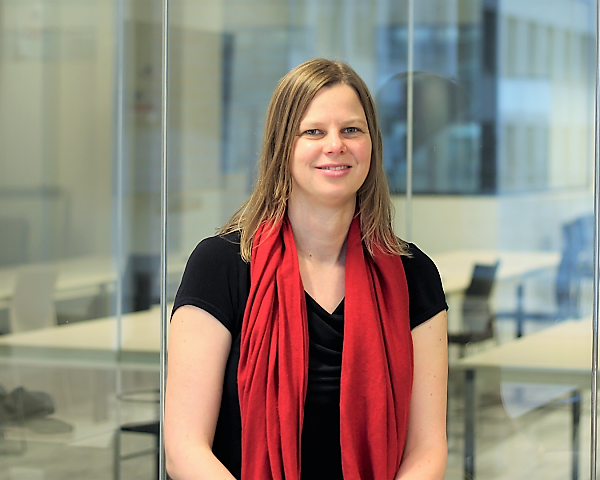
Anneleen van Tendeloo
Senior Advisor Project development & Grants